Circadian Lighting at Home: Do Tunable White LEDs Improve Sleep?
Learn how circadian lighting at home uses tunable white LEDs, daylight, timing, and dimming to support alert days and calmer evenings without overpromising better sleep.

Circadian Lighting at Home: The Short Answer
Circadian lighting at home can make evenings more sleep-friendly by giving you bright light during the day and dimmer, warmer light before bed. Tunable white LEDs make that schedule convenient, but they are not a cure for insomnia. The strongest practical approach combines morning daylight, adequate daytime illumination, reduced evening brightness, warm color appearance, and consistent sleep habits.
Light affects the body's internal clock. Brighter light earlier in the day supports alertness and helps anchor the sleep-wake schedule. Bright light late at night can delay the biological signal for sleep. Color spectrum matters, but brightness, timing, duration, and personal sensitivity matter too. A bright warm lamp can still be stimulating, while a dimmer cool source may have less effect than its color temperature suggests.
The U.S. Department of Energy (DOE) describes LED color-tuning systems as a way to vary light output and spectral appearance. ENERGY STAR helps buyers identify bulbs that meet tested performance requirements, while IEEE 1789 offers guidance related to LED current modulation and flicker. Together, those references point to a sensible buying rule: prioritize reliable dimming, stable light, usable schedules, and sufficient output—not a dramatic wellness claim on the box.

What Is Circadian Lighting?
Circadian lighting is lighting planned around the roughly 24-hour rhythm that influences sleep, alertness, hormone timing, and other body functions. At home, it usually means brighter and often cooler-looking light in the morning and daytime, followed by lower light levels and a warmer appearance in the evening.
Tunable white LEDs contain multiple LED channels that can blend from warm white to cool white. A typical bulb might cover approximately 2,200K or 2,700K at the warm end and 5,000K or 6,500K at the cool end. Color temperature describes appearance; it does not fully describe the spectrum or biological effect. Two bulbs labeled 3,000K can differ in spectral distribution, brightness, glare, and flicker.
Color-changing RGB bulbs can imitate white light, but a dedicated tunable-white product often produces better white-light quality across its range. Check lumen output at multiple color settings, color rendering, dimming range, and whether the bulb maintains smooth transitions. Our guide to [lumens, CRI, and color temperature](/blog/understanding-lumens-cri-color-temperature) explains those specifications.
Do Tunable White LEDs Actually Improve Sleep?
They can support a better light environment, especially when they reduce bright evening exposure and make a consistent schedule automatic. But buying a tunable bulb does not guarantee longer or deeper sleep. Results depend on when the light is used, how much reaches the eyes, the person's schedule and sensitivity, daylight exposure, screen habits, and underlying sleep or health conditions.
The useful mechanism is not simply “blue light is bad.” Short-wavelength light can strongly influence circadian responses, but intensity and timing remain critical. During the day, blue-enriched daylight is normal and useful. At night, the practical goal is to reduce total light exposure and avoid bright, cool-looking light close to the eyes.
Treat circadian lighting as environmental support. If sleep problems are persistent, severe, or accompanied by symptoms such as loud snoring, breathing pauses, or major daytime sleepiness, lighting is not a substitute for medical evaluation.
The Best Lighting Schedule for a Typical Home
Morning: Get Bright Light Early
Open blinds and spend time outdoors soon after waking when possible. Daylight is usually far brighter than indoor residential lighting, even on an overcast day. If the home is dark, use brighter general lighting with a neutral-to-cool appearance—roughly 3,500K to 5,000K is a practical range, not a medical prescription.
Focus on the kitchen, bathroom, breakfast area, and home office. Light should reach the eyes indirectly without glare. A bright ceiling fixture behind you may contribute less than a well-lit room with luminous surfaces in your field of view.
Daytime: Support Tasks and Alertness
Use enough light for reading, cooking, work, and safe movement. Layer ambient and task lighting instead of forcing one overhead fixture to do everything. Daylight-responsive shades and dimming can keep the room comfortable as sunlight changes.
For workspaces, neutral white light around 3,500K to 4,500K often feels crisp without appearing icy. More important than the exact number is adequate task illumination, low glare, good color rendering, and minimal flicker. If cameras show moving bands or the light causes discomfort while dimmed, investigate compatibility rather than assuming the problem is unavoidable.

Evening: Dim Before You Warm
Begin lowering light levels about two to three hours before bedtime. Shift frequently used rooms toward 2,200K to 2,700K, but remember that reducing brightness is at least as important as changing color appearance. Turn off unnecessary ceiling lights and use shaded table lamps, wall lights, or low-level task lights.
Keep the brightest sources out of direct view. A warm bulb at full output inches from the face is not automatically better than a carefully dimmed source. In bathrooms, use a low nighttime scene for routine visits while retaining a separate bright setting for cleaning and grooming.
Night: Preserve Darkness and Safety
Bedrooms should be as dark as practical. Cover bright indicators and prevent outdoor light from spilling in where it disrupts sleep. For hallways and stairs, low-level amber or warm-white lights with motion sensors can improve safety without flooding the home. Do not reduce lighting where doing so creates a fall risk.
How to Choose Tunable White Bulbs and Fixtures
Start with the fixture and task. Confirm the bulb base, voltage, physical dimensions, enclosure rating, wet- or damp-location rating, and maximum wattage. Recessed fixtures may perform better with a matched retrofit module than with a generic smart bulb.
Then compare these features:
- Useful tuning range: A warm endpoint near 2,200K to 2,700K and a daytime endpoint near 5,000K cover most residential schedules.
- Brightness: Compare lumens, including whether maximum output changes at the warm and cool endpoints.
- Dimming quality: Look for smooth low-end control without pop-on, dropout, buzzing, shimmer, or abrupt color shifts.
- Color quality: Prefer a high CRI and review R9 or broader color-quality data when available, especially for kitchens, art, and skin tones.
- Local control: A wall control or physical fallback keeps lights usable if an app, router, or cloud service fails.
- Automation: Sunrise, sunset, time-based scenes, gradual fades, and household-wide control are more useful than dozens of novelty colors.
- Efficiency and testing: ENERGY STAR certification can help identify products tested against defined performance and reliability criteria.
Avoid Flicker, Glare, and Automation Problems
A sleep-oriented schedule can still be uncomfortable if the LEDs flicker or the fixtures create glare. IEEE 1789 addresses potential health effects of temporal light modulation and provides recommended practices for high-brightness LEDs. Ask manufacturers for flicker metrics at full output and throughout the dimming range, because a lamp may behave well at 100 percent and poorly near its minimum.
Do not put a smart bulb on an incompatible wall dimmer unless the manufacturer explicitly supports that combination. Two control systems trying to dim the same electronics can cause buzzing, flicker, unstable color, or early failure. Our [low-flicker LED guide](/blog/low-flicker-led-lights-eye-strain-guide) covers practical checks.
Build simple automations that fail gracefully. A morning scene, daytime scene, sunset transition, and bedtime scene are usually enough. Keep manual controls obvious for guests and household members. Set transitions over several minutes so the change feels natural, and confirm what happens after a power outage or network failure.
A Simple Room-by-Room Setup
In bedrooms, prioritize darkness at night, warm dim bedside lighting, and a bright morning scene. Avoid exposed bright bulbs in the direct line of sight from bed.
In kitchens, retain high-output task lighting for knives, hot surfaces, and cleaning. Create a separate evening scene that dims general lighting while leaving safe task illumination available.
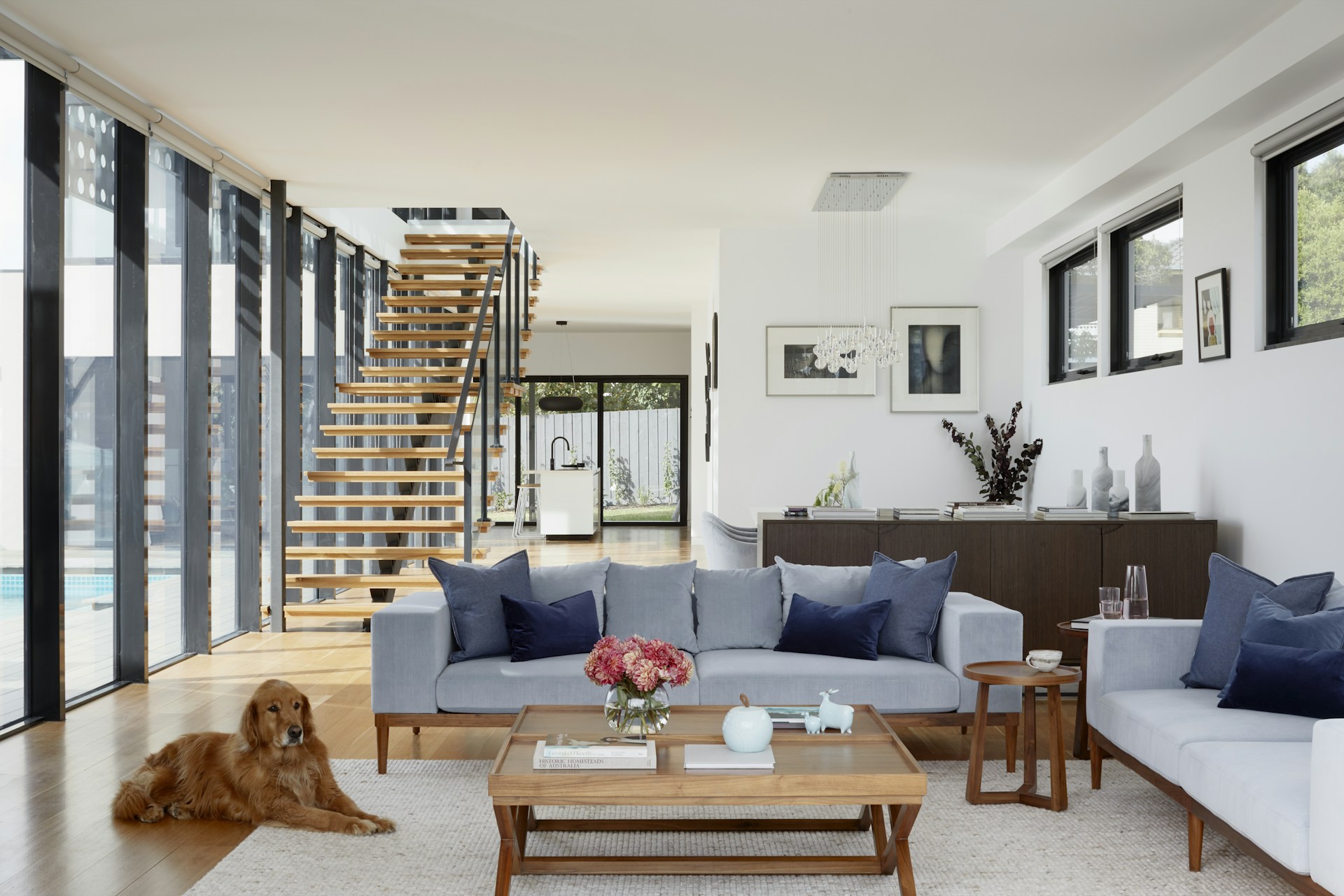
In living rooms, use multiple zones: bright and broad by day, lower and shaded at night. In home offices, use daylight and task lighting during work hours, then end the work scene on a schedule.
Are Tunable White LEDs Worth the Cost?
They are most worthwhile when household schedules are consistent enough to automate, rooms serve both daytime and evening purposes, or fixed-color lights are routinely too harsh at night. A few strategically placed fixtures can deliver most of the benefit; every closet and utility room does not need color tuning.
Before replacing working LEDs, test one bedroom and one living area. Confirm that people use the scenes, dimming is smooth, and manual control remains convenient. If not, bright daytime light plus warm dimmable evening lamps may be simpler and cheaper.
Bottom Line
Good circadian lighting at home follows a clear pattern: daylight and brighter electric light early, useful task light during the day, then dimmer and warmer light before bed. Tunable white LEDs make the transitions easy, but timing, brightness, comfort, and consistency matter more than a specific color-temperature claim.
Buy for light quality and control reliability, pilot the setup in real rooms, and preserve manual operation. The goal is not to simulate a laboratory sunrise. It is to make bright days and dark nights the effortless default.
Sources
- [U.S. Department of Energy: Color-Tunable Products](https://www.energy.gov/eere/ssl/color-tunable-products)
- [ENERGY STAR: Light Bulbs](https://www.energystar.gov/products/light_bulbs)
- [IEEE Std 1789-2015: Recommended Practices for Modulating Current in High-Brightness LEDs](https://standards.ieee.org/standard/1789-2015.html)
FAQ
What color temperature is best for sleep?
Use a warm appearance around 2,200K to 2,700K in the evening, combined with low brightness. No single color temperature guarantees sleep; timing, intensity, duration, and individual sensitivity also matter.
How long before bed should lights become warmer and dimmer?
A practical starting point is two to three hours before bedtime. Automate a gradual transition, then adjust it to the household's routine and comfort.
Is warm light enough, or must it also be dim?
It should also be dim. A bright warm source can still deliver substantial light to the eyes. Reduce overall illumination, remove direct glare, and use only the light needed for safe evening activities.
Do I need tunable white bulbs in every room?
No. Start with bedrooms, the living room, kitchen, and home office. Fixed warm LEDs are usually sufficient in spaces used only briefly at night.
Can circadian lighting treat insomnia?
No. It can support a healthier light-dark pattern, but it is not a medical treatment. Persistent sleep problems deserve evaluation by a qualified healthcare professional.
Related Articles

Networked Lighting Controls in 2026: What the Latest DLC Update Means
DLC networked lighting controls in 2026 reward verified interoperability, cybersecurity, energy reporting, and commissioning—not simply connected fixtures.

Solid-State Lighting in 2026: What the Latest LED Advances Mean for Buyers
Solid-state lighting technology in 2026 delivers better efficacy, control, color, and serviceability—but buyers still need to verify complete-fixture performance.