Smart Dimmable Light Bulbs: Why They Are Becoming the Default Home Lighting Upgrade
A practical guide to smart dimmable light bulbs: where they make sense, how dimming and schedules affect energy use, and what compatibility issues to check before buying.

Smart Dimmable Light Bulbs: The Short Answer
Smart dimmable light bulbs are becoming the default home lighting upgrade because they combine three useful improvements in one product: LED efficiency, adjustable brightness, and everyday control. A standard LED bulb lowers wattage. A dimmable smart LED can also change mood, reduce unnecessary brightness, follow a schedule, respond to sensors, and make hard-to-reach lamps easier to manage.
That does not mean every socket needs a smart bulb. The best use cases are lamps, accent lights, bedrooms, living rooms, exterior fixtures, and rooms where people often forget lights on. For ceiling fixtures controlled by wall switches, a smart dimmer or smart switch may be cleaner than filling every socket with connected bulbs. The right answer depends on the room, the switch wiring, the number of bulbs, and how people actually use the space.
The U.S. Department of Energy says residential LEDs use at least 75% less energy than incandescent lighting. ENERGY STAR certified bulbs are tested for performance claims such as brightness, color, energy use, and lifetime. IEEE 1789 is often referenced in lighting discussions because poor LED drivers and bad dimming can create flicker. So the buying goal is simple: choose smart dimmable bulbs that save energy, dim smoothly, look good, and remain easy to control without turning the house into a troubleshooting project.

What Makes Smart Dimmable Bulbs Different?
A standard LED bulb has one job: turn electrical power into light efficiently. A smart dimmable LED adds a control layer. Depending on the product, that layer may include app control, voice assistant support, schedules, scenes, timers, color temperature adjustment, motion routines, energy monitoring, or compatibility with Matter, Thread, Zigbee, Bluetooth, or Wi-Fi.
The dimming part is just as important as the smart part. Many people buy connected bulbs for voice control, then keep them at full brightness all the time. That misses the point. Dimming lets one lamp serve different jobs: bright task light in the afternoon, soft evening light after dinner, low night light for a hallway, or warm reading light beside a bed.
Compared with older incandescent dimming, LED dimming is more technical. The bulb, driver, firmware, and control method all affect the result. A good smart bulb dims smoothly without buzzing, stepping, flashing, or color shifting in an ugly way. A weak product may look fine at 100% and become annoying below 30%.
If your main concern is energy savings, start with our broader guide to [LED energy savings for homes and businesses](/blog/led-energy-savings-homes-businesses-2026). Smart features are valuable, but LED efficiency is still the foundation.
Where Smart Dimmable Bulbs Make the Most Sense
The best room for a smart bulb is one where the bulb itself is the control point. Table lamps, floor lamps, plug-in pendants, bedside lights, and decorative fixtures are ideal because people expect flexible behavior from them. You can leave the lamp switch on, control the bulb from the app or voice assistant, and build useful scenes without rewiring anything.
Living rooms benefit because lighting needs change through the day. Bright light may help with cleaning, reading, or family activity. Lower light works better for movies, conversation, or evening wind-down. A few dimmable smart bulbs in lamps can make the room feel more comfortable while reducing the need to blast overhead fixtures.
Bedrooms are another strong fit. Bedside lamps can support warm dim scenes, wake-up routines, and late-night low output. A smart bulb is also helpful when the switch is across the room or behind furniture.
Exterior lights can benefit from schedules and sunset routines, but buyers need outdoor-rated products and reliable connectivity. Porch lamps, patio fixtures, and seasonal accent lighting can work well. Security lighting is more complicated because manual override, sensor behavior, and reliability matter more than novelty.
Kitchens and bathrooms are mixed cases. Task lighting needs reliable brightness and good color rendering. Smart bulbs can work in lamps or accent fixtures, but hardwired downlights and vanity fixtures often work better with compatible LED bulbs on a proper dimmer or with integrated smart controls.
When a Smart Switch Is Better Than Smart Bulbs
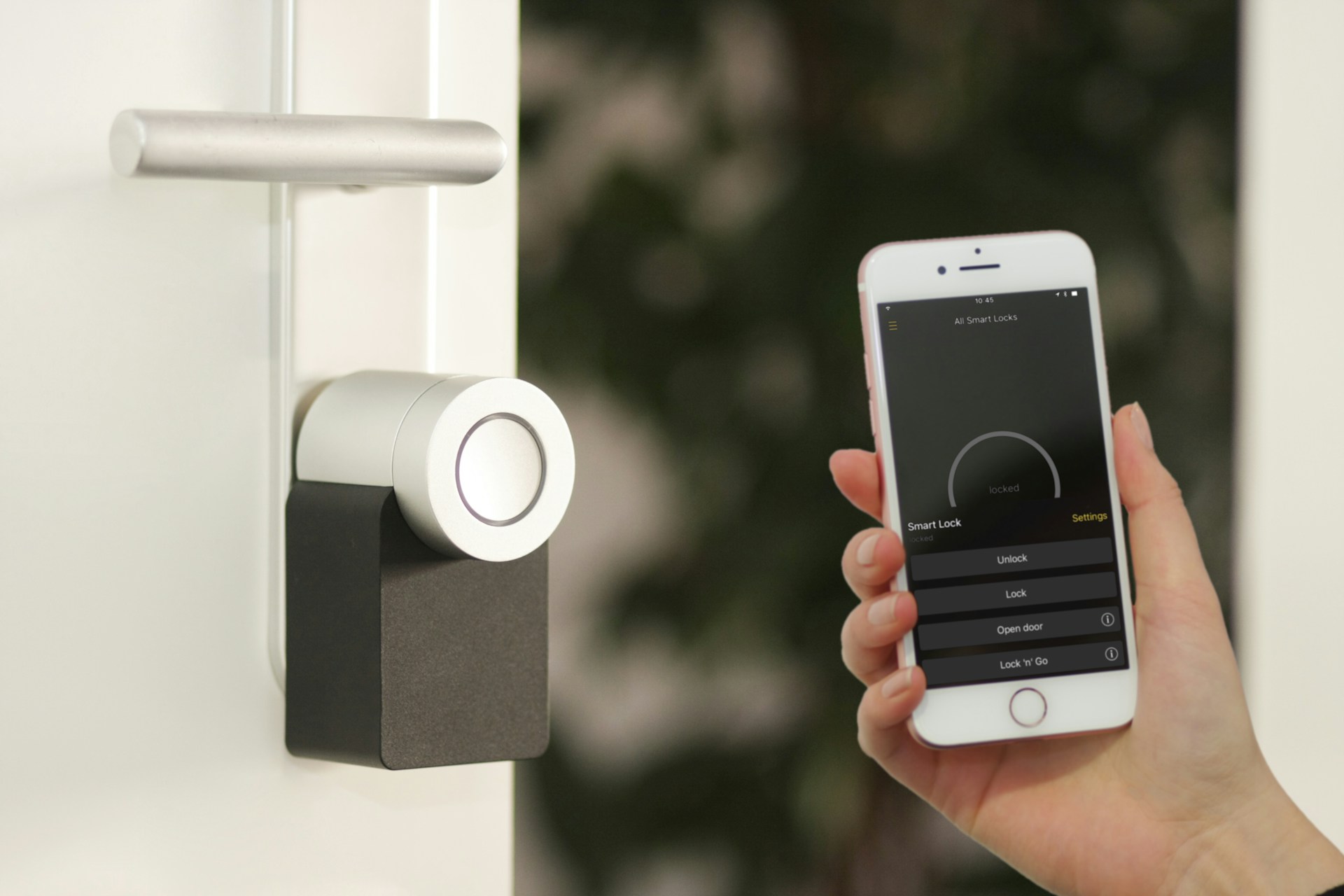
Smart dimmable bulbs are not always the best upgrade. If one wall switch controls six recessed lights, six smart bulbs can be expensive and awkward. If someone turns the wall switch off, the bulbs lose power and disappear from the app until the switch is turned back on. That is not a polished daily experience.
A smart dimmer or smart switch often makes more sense for ceiling fixtures. It preserves normal wall control, keeps one control point for the circuit, and can manage several ordinary dimmable LED bulbs at once. This is especially useful for kitchens, hallways, dining rooms, and living rooms with multi-bulb fixtures.
The tradeoff is installation. Smart switches may require a neutral wire, load compatibility, correct wiring, and multi-way planning. Renters may not be able to replace switches. In those cases, smart bulbs are the easier path. Our guide to [smart lighting during renovation](/blog/smart-lighting-renovation-guide) explains why switches, wiring, and backup controls should be planned before walls are closed.
Use this rule of thumb: choose smart bulbs for lamps and small flexible zones. Choose smart dimmers or switches for fixed ceiling lighting where the wall switch should remain the main control.

Do Smart Dimmable Bulbs Save Energy?
They can, but the savings come from behavior. The LED itself provides the big efficiency gain over incandescent lighting. Smart dimming and scheduling add savings only when they reduce brightness or runtime.
For example, a lamp that used to run at full brightness from sunset to bedtime may now run at 40% in the evening and shut off automatically at midnight. A porch light that used to stay on all day can follow sunset and sunrise. A kids' room lamp can turn off after a routine. A hallway light can run at low brightness overnight instead of full output.
Those changes matter because light output and runtime are where waste happens. A smart bulb left on at 100% for the same number of hours as a regular LED will not save much extra. It may even use a tiny amount of standby power when off because its radio remains reachable.
That standby draw is usually small for a few bulbs, but it becomes worth thinking about if you plan to install dozens. In a whole-home setup, use smart controls where they change behavior and standard ENERGY STAR LEDs where simple switching is enough. Our comparison of [LED bulbs vs smart bulbs](/blog/led-bulbs-vs-smart-bulbs-savings-guide) covers the payback math in more detail.
Compatibility Checks Before You Buy
Compatibility is where many smart lighting projects get messy. Before buying, check the control system, socket type, fixture rating, dimming behavior, and household habits.
First, confirm the ecosystem. If your home uses Apple Home, Google Home, Amazon Alexa, Samsung SmartThings, Home Assistant, or another platform, make sure the bulb works with it directly or through the right hub. Matter support can simplify cross-platform control, but not every Matter product supports every advanced feature in every app.
Second, check the wireless method. Wi-Fi bulbs are easy to start with because they usually do not require a hub, but large numbers of Wi-Fi devices can clutter a weak router. Zigbee and Thread bulbs can be more efficient in bigger smart-home systems, but they need a compatible hub, bridge, or border router.
Third, avoid putting smart bulbs on old wall dimmers unless the manufacturer says that exact setup is allowed. Many smart bulbs expect full power and perform dimming internally. An incompatible wall dimmer can cause flicker, buzzing, dropouts, or premature failure.
Fourth, match the bulb to the fixture. Enclosed fixtures, recessed cans, damp locations, wet locations, outdoor lanterns, and high-heat areas need suitable ratings. Heat is hard on LED electronics. A smart bulb packed into a hot enclosed globe may not last as long as the package suggests.
Fifth, think about guests and backup control. A room should still be understandable when the phone is missing, Wi-Fi is down, or someone unfamiliar with the house walks in. Smart lighting should make the home easier, not more fragile.
Brightness, Color, and Comfort Matter
Do not buy smart bulbs only by watt replacement language. Compare lumens. Around 800 lumens is the common range for replacing a traditional 60-watt incandescent, but the right brightness depends on the lamp shade, room size, fixture direction, and task.
Color temperature is equally important. Warm white around 2700K feels natural in living rooms and bedrooms. Tunable white bulbs can shift cooler during active hours and warmer at night. Full-color bulbs can be fun for accent lighting, but most daily use still depends on good white light.
Color rendering matters where skin tones, food, clothing, artwork, and finishes need to look natural. If the product only advertises millions of colors and says little about white-light quality, look more carefully. A bulb can be entertaining and still be mediocre for daily lighting.
Flicker is another comfort issue. Some LED products flicker visibly. Others flicker at levels people do not consciously see but may still find uncomfortable. IEEE 1789 discusses recommended practices for modulating current in high-brightness LEDs. The practical takeaway for homeowners is to buy reputable bulbs, avoid incompatible dimmers, test low brightness settings, and return products that flicker or buzz.
For the basics of brightness and color quality, see our guide to [lumens, CRI, and color temperature](/blog/understanding-lumens-cri-color-temperature).
Best Upgrade Plan for Most Homes
Start small. Pick one room where dimming and scheduling will actually improve daily life. A living room with two lamps, a bedroom with bedside lights, or a porch fixture is a better first project than replacing every bulb in the house.
Test the basics for a week:
- Does the bulb stay connected?
- Does it dim smoothly at low output?
- Does the color temperature look good at night?
- Can guests still use the room?
- Do schedules work reliably?
- Does anyone keep turning the wall switch off?
This slower approach saves money and prevents compatibility mistakes. It also keeps the system maintainable. The goal is not to own the most connected bulbs. The goal is better light with less waste and less friction.
Bottom Line
Smart dimmable light bulbs are becoming the default upgrade because they fit how people want homes to work now: efficient, flexible, comfortable, and easy to adjust. They are especially useful in lamps, bedrooms, living rooms, exterior fixtures, and accent lighting.
Buy them carefully. Check ecosystem support, wireless protocol, fixture rating, dimming behavior, color quality, standby power, and backup control. Use smart switches for multi-bulb ceiling circuits when they make more sense. Keep ordinary ENERGY STAR LEDs where simple reliable light is enough.
The best smart lighting setup is not the most complicated one. It is the one that gives each room the right brightness at the right time, saves energy through lower output and smarter schedules, and still works naturally when someone reaches for the switch.
Sources
- [U.S. Department of Energy: LED Lighting](https://www.energy.gov/energysaver/led-lighting)
- [ENERGY STAR: Light Bulbs](https://www.energystar.gov/products/light_bulbs)
- [IEEE Std 1789-2015: Recommended Practices for Modulating Current in High-Brightness LEDs](https://standards.ieee.org/standard/1789-2015.html)
FAQ
Are smart dimmable light bulbs worth it?
Yes, when you use dimming, schedules, scenes, or automation often. They are most useful in lamps, bedrooms, living rooms, exterior fixtures, and areas where people forget lights on.
Do smart dimmable bulbs save electricity?
They can save electricity when they reduce brightness or runtime. The main energy savings comes from LED efficiency, while smart features add savings through dimming, schedules, and automation.
Can smart bulbs work with normal light switches?
Yes, but the switch usually needs to remain on so the bulb has power. If people regularly turn the switch off, a smart switch or smart dimmer may be a better choice.
Do smart bulbs work on dimmer switches?
Many smart bulbs should not be used with traditional wall dimmers unless the manufacturer specifically allows it. Incompatible dimmers can cause flicker, buzzing, disconnects, or poor performance.
What rooms should get smart dimmable bulbs first?
Start with living room lamps, bedside lamps, porch lights, accent fixtures, and rooms where lower evening brightness or automatic shutoff would be useful. Use standard LEDs in low-use spaces where smart control adds little value.
Related Articles

Smart Ceiling Fan Light Control: Wall Switches vs Remotes for New Builds
Smart ceiling fan light control is easiest to get right before drywall closes. This guide explains when to wire separate wall controls, when a remote still makes sense, and how to avoid dimming, flicker, and smart-home headaches.

DALI-2 Smart Lighting Explained: What It Means for Modern LED Systems
DALI-2 smart lighting gives LED systems a more reliable way to handle dimming, sensors, scenes, emergency lighting, and building-wide control. Here is what buyers should know before choosing it over basic smart bulbs or switches.