Smart Lighting Energy Savings: What Homeowners Are Changing in 2026
A practical 2026 guide to smart lighting energy savings: which automations lower energy use, when LED bulbs are enough, and when fixtures or controls are worth the upgrade.

Smart Lighting Energy Savings: The Short Answer
Smart lighting energy savings come from two separate improvements: efficient LED technology and smarter control of when lights run. Replacing incandescent or halogen bulbs with LEDs creates the biggest baseline cut. Adding smart schedules, dimming, occupancy routines, and daylight-aware behavior can reduce the wasted hours that remain.
The U.S. Department of Energy says residential LEDs use at least 75% less energy than incandescent lighting and can last up to 25 times longer. ENERGY STAR certified bulbs are tested for performance claims such as brightness, energy use, color quality, and lifetime. Smart lighting builds on that foundation, but it only saves extra electricity when it changes behavior: lights turn off sooner, run at lower output, or avoid turning on when daylight is enough.
For most homeowners in 2026, the best upgrade is not replacing every fixture with the most expensive connected product. Start with high-use rooms, exterior lights, lamps that stay on too long, and areas where people forget switches. Use ordinary ENERGY STAR LEDs where simple reliable light is enough. Use smart bulbs, switches, dimmers, and sensors where automation will actually reduce runtime or improve daily comfort.
Why Homeowners Are Revisiting Lighting Costs
Lighting is no longer the largest electric load in many homes, but it is still one of the easiest to control. Heating, cooling, water heating, appliances, and EV charging can be expensive to change. Lighting upgrades are smaller, faster, and easier to test room by room.
That is why homeowners are paying attention again. Many houses still have a mixed lighting inventory: old decorative incandescent bulbs, halogen recessed lamps, fluorescent tubes in garages, early LEDs with weak dimming, and smart bulbs added one at a time without a plan. The result is often a home that uses less power than it did 15 years ago but still wastes light in predictable places.
The biggest waste patterns are familiar:
- Porch and security lights left on all night
- Bathroom or hallway lights left on after use
- Kids rooms and playrooms with lights forgotten
- Bright living room lights used when dim output would be enough
- Garage, basement, and laundry lights running after people leave
- Accent lighting or LED strips left on as decoration
Smart lighting helps when it directly fixes one of those patterns. A schedule for exterior lights can prevent unnecessary daytime runtime. A motion sensor in a garage can shut lights off after unloading the car. A smart dimmer in a living room can make 40% brightness the evening default instead of 100%.
For a broader energy baseline, see our guide to [LED energy savings for homes and businesses](/blog/led-energy-savings-homes-businesses-2026).
The Savings Hierarchy: Bulbs First, Controls Second
The first question is simple: are the lights already efficient LEDs? If not, replace the bulbs or fixtures first. Smart controls attached to inefficient lighting are useful, but the wattage savings from LEDs usually beat the control savings.
For example, replacing a 60-watt incandescent with a 9-watt LED saves 51 watts whenever the light is on. If that bulb runs three hours per day, the annual savings can be meaningful across a whole home. The same logic applies to halogen recessed lights, garage fluorescents, and outdoor fixtures with older lamps.
Once the home already uses LEDs, the next savings layer comes from controls. LEDs reduce watts. Smart lighting reduces wasted hours and unnecessary brightness. That second layer is smaller in some rooms and significant in others.
Good candidates for smart controls include:
- Exterior fixtures with predictable schedules
- Rooms where lights are often forgotten
- High-use living spaces where dimming feels natural
- Hallways, closets, pantries, garages, and laundry rooms
- Homes with accessibility needs or irregular routines
- Vacation homes and short-term rentals where lighting is hard to monitor
Which Smart Features Save the Most Power?
Schedules are the easiest win. Exterior lights can turn on at sunset and off at a fixed bedtime, or follow sunrise and sunset automatically. Interior accent lights can shut down overnight. Holiday lights and decorative LEDs can avoid running for hours after everyone goes to sleep.
Occupancy and vacancy sensing are next. A motion routine can turn lights on when someone enters and off after a delay. Vacancy behavior is often better for bedrooms, offices, and living areas because it lets people turn lights on manually but shuts them off automatically when the room is empty.
Dimming is underrated. Running an LED at lower output generally uses less electricity, and it often makes the room more comfortable. The savings are not always perfectly linear because drivers vary, but using 30% to 60% brightness in the evening can reduce consumption and glare at the same time.
Daylight-aware routines can help in kitchens, offices, and rooms with large windows. The goal is not to make the home feel automated for its own sake. It is to avoid turning on full artificial light when natural light is already doing the work.
Scenes can save energy when they set lower defaults. A good evening scene might use two lamps at warm 40% output instead of six recessed lights at full brightness. A bad scene turns on every accent light in the room and calls it efficient because the products are LEDs.
Smart Bulbs vs Smart Switches for Energy Savings
Smart bulbs and smart switches both save energy, but they solve different problems.
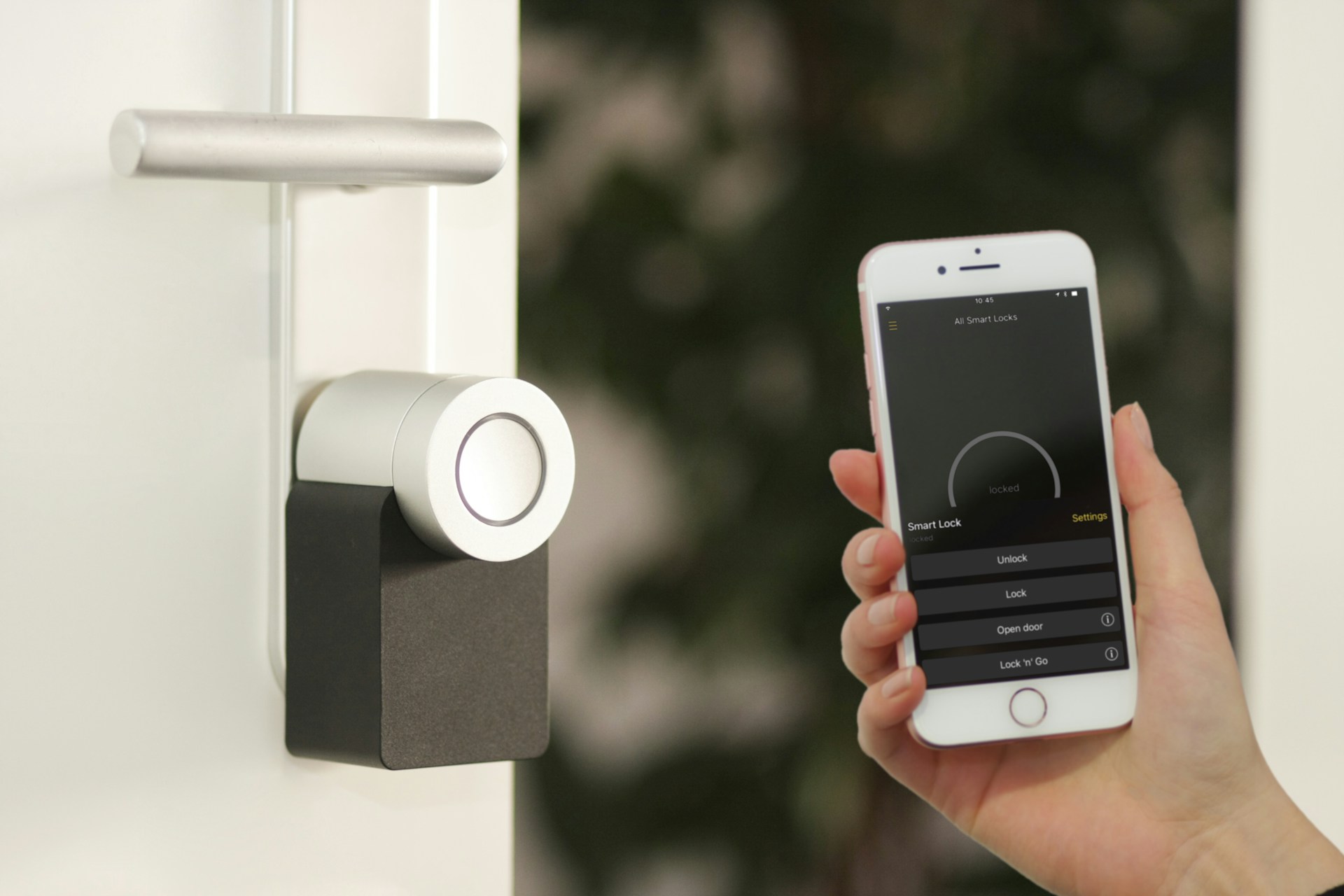
Smart bulbs are best for lamps, accent lights, tunable white, color scenes, and fixtures where each bulb should act independently. They are easy to install and useful in rentals because they do not require wiring changes. A smart bulb in a bedside lamp can dim at night, turn on gently in the morning, and shut off automatically if forgotten.
Smart switches and dimmers are usually better for hardwired ceiling lights, recessed lighting, bathrooms, kitchens, hallways, and exterior circuits. They preserve normal wall control and can manage several bulbs at once. If people regularly turn a wall switch off, smart bulbs on that circuit may lose power and stop responding. A smart switch avoids that friction.
For energy savings, the right choice is the one people will actually use correctly. A smart bulb behind a switched-off wall plate saves nothing if it disconnects and becomes annoying. A smart dimmer that everyone understands can quietly reduce brightness and runtime every day.
Homes using Matter, Thread, or multi-platform systems should still make this room-level decision first. Our [Matter smart lighting guide](/blog/matter-smart-lighting-2026-bulbs-switches-hubs) explains how compatibility standards help, but standards do not replace good lighting design.
When Replacing Bulbs Is Enough
Sometimes the best smart-lighting decision is not to make a light smart.
Replace bulbs only when the room needs reliable, efficient light and does not have a waste problem. Closets, guest rooms, storage areas, utility corners, and rarely used fixtures often fit this category. A good ENERGY STAR certified LED with the right lumens and color temperature is simple, inexpensive, and reliable.
Bulb-only upgrades also make sense when controls would confuse the room. A guest bathroom should not require an app. A pantry light should not depend on a cloud service. A stair light should always behave predictably.
Use the simplest product that solves the actual problem. If the problem is old wattage, use LEDs. If the problem is lights left on, add controls. If the problem is poor comfort, improve dimming, color temperature, glare, and placement.
When Fixtures or Controls Are Worth It
Fixtures and controls are worth upgrading when the existing system limits efficiency, comfort, or reliability. Old recessed cans may use inefficient lamps, produce glare, leak air, or struggle with dimming. Outdoor fixtures may be poorly sealed or use lamps that fail early. Older dimmers may not be compatible with modern LEDs.
Controls are worth it when the lighting pattern is predictable enough to automate. Exterior lights are a strong example. So are garages, hallways, laundry rooms, and rooms where people often have their hands full. Smart dimmers are worth considering in living rooms, dining rooms, kitchens, and bedrooms because they can make lower brightness the default.
For smart bulbs specifically, prioritize rooms where flexible control improves daily life. Bedside lamps, reading lamps, media rooms, and accent lights are better candidates than every ceiling socket in the house. Our guide to [smart dimmable light bulbs](/blog/smart-dimmable-light-bulbs-home-upgrade) covers those buying choices in detail.
Comfort Still Matters: Flicker, Color, and Dimming
Energy savings should not come at the expense of comfort. Cheap LEDs with poor drivers can flicker, buzz, shift color, or dim badly. Some problems show up immediately. Others become obvious only after people spend time in the room.
IEEE 1789 is a technical standard often referenced in discussions of LED flicker and current modulation. Homeowners do not need to calculate flicker metrics, but they should treat visible flicker, buzzing, eye strain complaints, and unstable dimming as real product failures.
Check these basics before buying multiples:
- Lumens, not just watt replacement language
- Color temperature that fits the room
- CRI for kitchens, bathrooms, art, clothing, and task areas
- ENERGY STAR certification where available
- Dimmer compatibility for switches and bulbs
- Fixture rating for enclosed, damp, wet, or outdoor locations
- Return policy in case the product flickers or disconnects
Test one room before scaling the upgrade. If a bulb or dimmer behaves badly at low output, do not buy twenty more.
A Practical 2026 Upgrade Plan
Start with a quick home audit. List the lights that run the most, the lights people forget, and the lights that feel uncomfortable. Do not start with brand names. Start with behavior.
First, replace remaining incandescent, halogen, and fluorescent lamps with efficient LEDs. Choose the right lumens and color temperature by room. Second, add smart schedules to exterior and decorative lights. Third, use motion or vacancy sensing in transitional spaces. Fourth, add smart dimmers where lower default brightness will feel natural.
Keep manual controls obvious. Lighting is part of the home infrastructure. Guests, kids, and tired adults should not need an app to turn on a room. The best smart lighting system feels boring in the right way: it saves energy quietly, improves comfort, and still works like a normal home.
Finally, review the system after a month. If lights are still being left on, adjust the routine. If automations annoy people, simplify them. If a product disconnects, fix the network, switch type, or placement before expanding.
Bottom Line
Smart lighting energy savings are real when the upgrade changes watts, runtime, or brightness. LEDs create the foundation. Smart schedules, dimming, sensors, and daylight behavior add savings by cutting waste.
Most homeowners should upgrade in this order: efficient LEDs first, smart controls in high-waste areas second, better fixtures or dimmers where comfort and reliability justify the cost. Avoid making every light smart just because the technology is available. Put smart lighting where it will reduce waste without making the home harder to use.
The best 2026 lighting upgrade is efficient, predictable, comfortable, and simple enough that everyone in the house uses it correctly.
Sources
- [U.S. Department of Energy: LED Lighting](https://www.energy.gov/energysaver/led-lighting)
- [ENERGY STAR: Light Bulbs](https://www.energystar.gov/products/light_bulbs)
- [IEEE Std 1789-2015: Recommended Practices for Modulating Current in High-Brightness LEDs](https://standards.ieee.org/standard/1789-2015.html)
FAQ
How much can smart lighting reduce energy use?
Smart lighting saves the most when it replaces inefficient bulbs with LEDs and reduces wasted runtime through schedules, dimming, and sensors. If the bulbs are already efficient and rarely left on, the extra savings may be modest.
Do smart bulbs use power when they are off?
Yes. Connected bulbs use a small amount of standby power so they can listen for commands. The savings depend on whether dimming, schedules, or automation reduce more energy than the standby load adds.
Are smart switches better than smart bulbs?
Smart switches are usually better for ceiling lights and multi-bulb circuits. Smart bulbs are better for lamps, color scenes, tunable white, and rental-friendly upgrades.
Is it worth replacing working LED bulbs with smart bulbs?
Only when smart features will improve control, comfort, or wasted runtime. If a working LED is efficient and rarely left on, replacing it only for connectivity may not pay back quickly.
What is the easiest smart lighting energy-saving upgrade?
Start with exterior lights. Sunset schedules, bedtime shutoff, motion routines, and efficient outdoor LEDs can reduce long unnecessary runtime with very little daily effort.
Related Articles

Energy Efficient LED Lighting: How to Cut Costs as Power Prices Rise
Energy efficient LED lighting is still one of the fastest practical upgrades for homes and businesses facing higher electricity costs. Here is how to compare savings, specs, controls, and product claims before buying.

Networked Lighting Controls: How Commercial Buildings Save More Energy
Networked lighting controls can turn an LED retrofit into a managed energy system. This guide explains how sensors, scheduling, daylight response, and commissioning help commercial buildings save more than LEDs alone.