Smart Lighting in 2026: Matter, Energy Savings, and What to Buy
Smart lighting in 2026 is easier to mix across platforms, but real value still depends on Matter compatibility, efficient LEDs, useful controls, and reliable manual operation.

Smart Lighting in 2026: The Short Answer
Smart lighting in 2026 is worth buying when it solves a specific problem: lights left on in empty rooms, awkward switch locations, inconsistent schedules, security while traveling, or the need for better task lighting. Matter has made cross-platform setup more practical, but it has not made every bulb, switch, hub, and feature interchangeable.
For most homes, the best approach is simple. Use efficient LED lamps or fixtures, choose smart switches for rooms with several lights, reserve smart bulbs for lamps and color-changing applications, and keep physical controls available. Buy Matter-certified products when multi-platform compatibility matters, but verify the exact functions each ecosystem supports before ordering.
What Does Matter Change for Smart Lighting?
Matter is a common application standard for connected-home devices. Its main promise is that a certified product can join and operate across compatible ecosystems without a separate integration for every platform. A household can potentially control the same lighting through Apple Home, Google Home, Amazon Alexa, Samsung SmartThings, or another Matter controller.
That improves basic compatibility, especially for onboarding, on/off control, dimming, and device sharing. It also reduces the risk that a lamp becomes useless merely because the household changes phone brands or voice assistants. Matter can operate over Wi-Fi, Ethernet, or Thread, depending on the device. Thread is a low-power mesh network commonly used by sensors, switches, and bulbs, but it requires a compatible Thread border router.
Matter does not guarantee identical advanced features in every app. Scenes, effects, firmware tools, energy dashboards, and adaptive lighting may still depend on the manufacturer's app. Check the certification, connection type, controller requirements, and feature list for your platform.
For a deeper compatibility check, see our [Matter smart lighting guide for bulbs, switches, and hubs](/blog/matter-smart-lighting-2026-bulbs-switches-hubs). Commercial buyers should compare that consumer approach with [networked lighting controls in 2026](/blog/dlc-networked-lighting-controls-2026).
How Much Energy Can Smart Lighting Save?
The LED itself usually creates the biggest efficiency gain when replacing incandescent or halogen lighting. ENERGY STAR advises comparing brightness in lumens and energy use in watts, because wattage is not a measure of light output. A well-chosen LED can provide the required brightness with far less input power than an incandescent lamp.
Smart controls create additional savings only when they reduce unnecessary output or operating time. Useful strategies include switching lights off after vacancy, dimming below full output, responding to available daylight, and following schedules that match actual routines. A connected bulb that runs at full brightness for the same number of hours as an ordinary LED will not produce a meaningful control-related saving.
Standby power also matters. Each connected device consumes a small amount while waiting for commands. The goal is not to connect every socket, but to automate rooms where lights are routinely left on or overlit.
The U.S. Department of Energy describes occupancy sensing, timers, dimming, and daylight controls as ways to reduce lighting use. Treat any advertised savings percentage as a scenario, not a promise. Results depend on baseline lamp type, wattage, hours, occupancy patterns, dimming level, daylight, and whether people already turn lights off reliably.
Smart Bulbs or Smart Switches: Which Should You Buy?
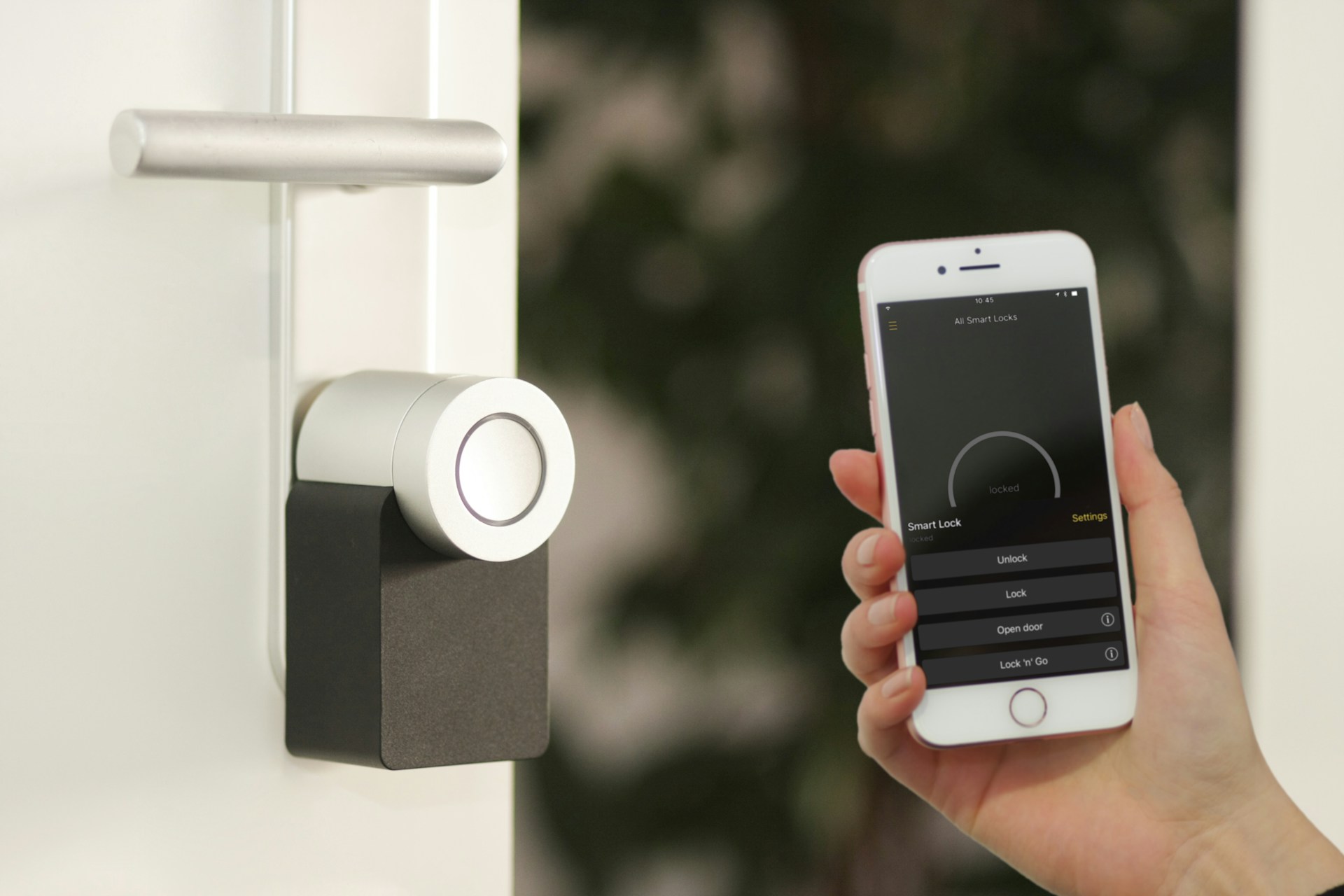
Smart bulbs are best for portable lamps, rentals, individual fixtures, color effects, and rooms where rewiring is impractical. They are easy to install and allow separate control of each lamp. Their weakness is behavioral: if someone turns off the wall switch, the bulb loses power and cannot respond remotely.
Smart switches are usually better for ceiling fixtures and rooms controlled from the wall. One switch can control several ordinary dimmable LEDs, everyone understands the physical interface, and the lights remain usable when a phone or cloud service is unavailable. Installation may require a neutral conductor, a compatible electrical box, correct load type, and professional help where local rules require it.
Do not put a smart bulb behind a dimming smart switch unless both manufacturers explicitly approve that combination. Two independent dimming systems can cause flicker, buzzing, unreliable startup, or shortened component life. Pick one control layer for the circuit.
Smart plugs suit floor and table lamps with simple on/off behavior, but do not add dimming unless the plug and load support it. Integrated fixtures can offer polished controls, yet cost more to replace if the electronics fail.
Which Smart-Lighting Features Are Worth Paying For?
Reliable local control is the most valuable feature. Lights should still work from a wall control during an internet outage. Local schedules and automations are preferable to routines that require a round trip to a vendor cloud.
Occupancy and vacancy sensing can deliver genuine convenience and savings in bathrooms, closets, laundry rooms, garages, hallways, and utility spaces. Vacancy mode—manual on and automatic off—often avoids unwanted activations while still preventing lights from being left on.
Sunrise and sunset scheduling is useful for exterior and entry lighting because it adjusts through the seasons. Daylight response can help near large windows, although a poorly placed sensor may create distracting changes. Adaptive color temperature can make spaces feel more comfortable, but it should be purchased for experience and function rather than marketed health promises.
Energy monitoring is worthwhile when it measures a meaningful load and presents usable history. It is less important for a single low-wattage bulb. Scenes are valuable when they replace repeated actions: a cooking scene, movie scene, bedtime path, or whole-home shutoff can simplify daily routines.
Color-changing lamps are worth the premium in entertainment rooms, children's rooms, decorative fixtures, or places where color is genuinely used. For closets, corridors, and general ceiling lighting, high-quality dimmable white light is usually the better value.
Light Quality Still Comes First
A smart lamp is still a lamp. Compare lumens, watts, color temperature, color rendering, beam shape, rated life, warranty, and whether it is approved for enclosed or damp locations. Match brightness to the room and task rather than buying the highest lumen number.
Dimming quality deserves a real-world test. LEDs can flicker or behave inconsistently when the driver, dimmer, firmware, and load are poorly matched. IEEE 1789-2015 discusses recommended practices related to current modulation in high-brightness LEDs. Consumers do not need to calculate the standard, but they should avoid vague “flicker-free” claims, look for credible test information, and test products at low, medium, and high output during the return window.
Check color consistency too. Lamps with the same labeled color temperature can look different side by side. Buy matching lamps together where exact appearance matters.
Privacy, Security, and Long-Term Support
Connected lights become part of the home network. Use unique account passwords, enable multifactor authentication when available, install firmware updates, and remove devices from accounts before selling or recycling them. Prefer vendors that state how long security updates will be provided.
Understand which functions are local and which require cloud access. Check what data the product collects, whether remote access can be disabled, and whether household members can receive separate permissions. A separate guest or internet-of-things network can reduce exposure, but network segmentation must still allow the controller and devices to communicate as designed.
Long-term support is a buying specification. Ask what happens if the manufacturer ends its cloud service. Matter can preserve standardized local functions in some cases, but proprietary scenes and analytics may disappear. Replaceable lamps and conventional wall controls generally carry less stranded-product risk than a highly integrated fixture dependent on one service.
A Practical Smart-Lighting Buying Plan
Start with one room. Record the problem, switch arrangement, lamp type, brightness, and desired automations. Confirm Wi-Fi coverage or Thread border-router availability before buying.
Choose the control method first. Use a smart switch for a multi-lamp ceiling circuit, a smart bulb for a portable or color-changing lamp, and a sensor where vacancy is the real problem. Verify neutral-wire, load, dimming, three-way, enclosed-fixture, damp-location, and platform requirements.
Install a small pilot and keep it for at least a week. Test wall controls, app control, voice control, schedules, scenes, outage recovery, minimum dimming, and household acceptance. If it works reliably, expand with the same product family or clearly compatible Matter devices.
For each automation, define the useful outcome. A hallway may need low output after midnight, a kitchen may need bright task lighting at dinner, and exterior lights may follow sunset. Avoid complicated routines that nobody can troubleshoot. Good smart lighting fades into the background.
Use our [smart bulbs versus smart switches comparison](/blog/smart-bulbs-vs-smart-switches-energy-savings) to choose the control layer, then estimate operating-cost impact with the [LED energy-savings calculator](/blog/led-lighting-energy-savings-calculator-real-payback).
Bottom Line
The best smart lighting in 2026 combines efficient LEDs, dependable physical controls, useful automation, and a supportable connectivity plan. Matter improves the odds that basic lighting functions will work across ecosystems, but buyers must still verify advanced features, network requirements, dimming compatibility, and offline behavior.
Spend first on light quality and the right control method. Automate places where lighting is left on, difficult to reach, or repeatedly adjusted. Pilot one room, measure whether the routine actually helps, and expand only after the setup proves reliable.
Sources
- [ENERGY STAR: Learn About LED Lighting](https://www.energystar.gov/products/lighting_fans/light_bulbs/learn_about_led_bulbs)
- [U.S. Department of Energy: Lighting Controls](https://www.energy.gov/femp/lighting-controls)
- [Connectivity Standards Alliance: Matter](https://csa-iot.org/all-solutions/matter/)
- [IEEE Std 1789-2015: Recommended Practices for Modulating Current in High-Brightness LEDs](https://standards.ieee.org/standard/1789-2015.html)
FAQ
How does Matter improve smart-light compatibility?
Matter provides a shared standard for commissioning and basic control across compatible ecosystems. It can make a certified light easier to use with more than one platform, although advanced scenes, effects, and energy features may still vary by app and manufacturer.
How much energy can smart lighting save?
There is no universal percentage. LEDs usually provide the largest reduction when replacing incandescent or halogen lamps. Smart controls add savings when occupancy sensing, schedules, daylight response, or dimming reduce actual runtime or output.
Which smart-light features are worth paying for?
Reliable local control, vacancy sensing, practical schedules, sunrise and sunset routines, smooth dimming, and clear long-term support usually provide the strongest value. Color effects and advanced scenes are worthwhile only when the household will use them.
Are smart bulbs better than smart switches?
Smart bulbs are better for portable lamps, rentals, and color control. Smart switches are usually better for ceiling fixtures and multi-lamp circuits because they preserve familiar wall operation and control the whole load.
Do smart lights work when the internet is down?
It depends on the product and setup. Physical switching and locally executed Matter or hub automations may continue, while cloud-dependent voice commands, remote access, and proprietary features may stop. Verify offline behavior before buying.
Related Articles

Best Smart Lights in 2026: What Homeowners Should Upgrade First
The best smart lights in 2026 are not always the flashiest devices. Homeowners get better results by upgrading high-use rooms, wall controls, exterior schedules, and dimming quality before buying decorative extras.

Best Smart Lights in 2026: What Changed and What Still Matters
The best smart lights in 2026 are easier to mix across platforms, but buyers still need to check brightness, Matter support, dimming quality, standby power, and how each room will actually be controlled.